
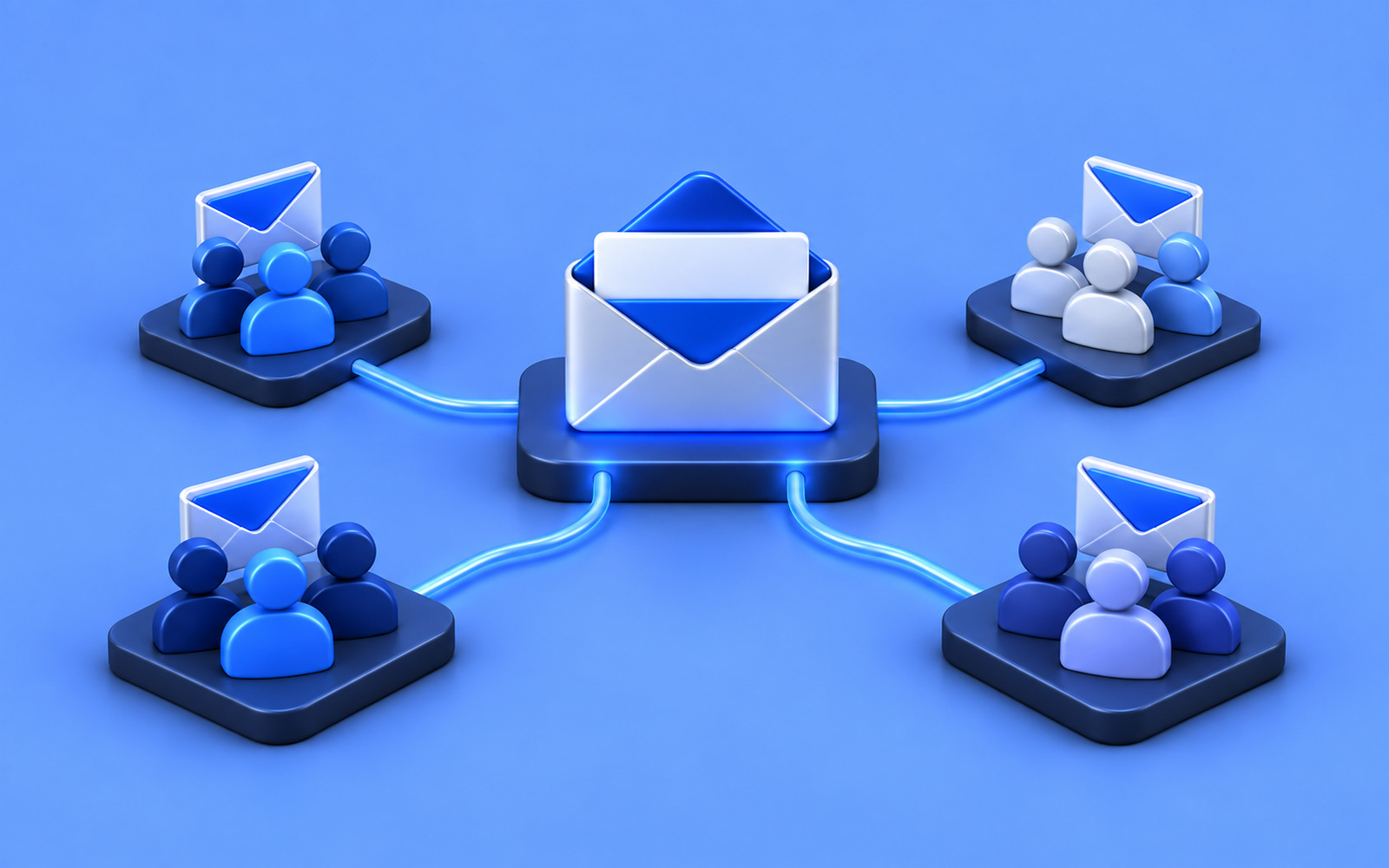
Segmentation means splitting your email list into smaller groups based on what you know about people, then sending each group messages that suit them. It is the simplest way to make email more relevant, and relevance is what drives clicks, sales and fewer unsubscribes. You do not need a huge list or expensive software to start. Most email platforms, from entry-level tools to full CRMs, support basic segments out of the box.
Why segmentation matters
When everyone receives the same email, most of it is irrelevant to most people. A coffee equipment supplier sending one newsletter to both home baristas and commercial cafés will bore half the list every time. Segmenting fixes that by matching the message to the reader. The benefits flow on:
- More clicks and conversions, because content matches interests
- Fewer unsubscribes and spam complaints, which protects deliverability
- Better insight into what each group of customers actually wants
- More useful data to feed into your website, ads and sales conversations
The main ways to segment
Demographic and firmographic
Basic facts about the person or business: location, age bracket, job role, industry or business size. Location is especially handy for Australian businesses with several service areas or stores. A builder covering Melbourne and Geelong, for instance, can send each area its own project news and display home invitations.
Psychographic
Interests, values, priorities and lifestyle. These are harder to capture but powerful. You can collect them by asking a simple question at sign-up (“What are you most interested in?”) or by noticing which topics people click on.
Behavioural
What people actually do, which is often the most useful signal of all:
- Pages they viewed on your website
- Products bought, and how recently
- Links clicked in previous emails
- Forms submitted or services enquired about
- Carts started but not completed
Lifecycle stage
Where someone is in their relationship with you: new subscriber, active lead, first-time customer, repeat customer or lapsed. Each needs a different conversation. A new subscriber needs a welcome; a lapsed customer needs a reason to come back.
How to set up your first segments
- Start with what you already have. Look at the data in your email platform, CRM, online store or booking system. You probably already know location, purchase history and where people signed up.
- Pick two or three segments that matter. For example, customers versus prospects, or one segment per main service. Too many segments too early creates more work than value.
- Collect a little more at sign-up. Add one optional question to your forms, such as which service interests them or their postcode. Keep it short, because every extra field costs you sign-ups.
- Use tags and custom fields consistently. Agree on naming rules so the same thing is not tagged three different ways.
- Automate where you can. Let actions add people to segments automatically, such as clicking a link about a specific service or making a purchase.
Personas, lists and lead scoring
Personas are short profiles of your main customer types: who they are, what they need and what makes them hesitate. They help you decide which segments are worth creating. If you do not have personas yet, our guide to writing for your audience is a good primer.
Static and dynamic lists are the two main ways platforms hold segments. A static list stays the same unless you change it, which suits one-off events. A dynamic segment updates automatically as people meet the rules, such as “purchased in the last 90 days”, which suits ongoing campaigns.
Lead scoring assigns points for actions such as visiting the pricing page, clicking several emails or requesting a quote. Once a lead crosses a threshold, your sales team can follow up personally. It works best when sales and marketing agree on what a qualified lead looks like, and it ties in closely with using buyer intent data.
Common mistakes
- Building segments so small that each email takes hours to prepare for a handful of people
- Relying on data that is years out of date
- Segmenting the list but still sending the same content to every group
- Forgetting exclusions, such as promoting a service to people who just bought it
- Collecting sensitive details you do not need. Only ask for information you will use, and handle it in line with your privacy policy.
How to measure whether it is working
Compare segmented campaigns against your earlier broadcast emails on click rate, conversion rate, revenue or bookings per email, and unsubscribe rate. Opens are less reliable now because privacy features can inflate them, so focus on actions. Track links with UTM parameters so results show up in Google Analytics 4, and review which segments respond best each quarter.
Where this fits in your wider marketing
Segmentation is not just for email. The same groups can shape the pages on your website, your ad audiences and the topics you write about. It also lifts the rest of your email work, from writing subject lines that get opened to fixing the common reasons email underperforms. If you are deciding whether a message suits email or text, see email or SMS.
Quick segmentation checklist
- Two or three meaningful segments to start
- One extra question on your sign-up form
- Consistent tags and field names
- Automated rules that keep segments current
- Exclusions set for recent buyers
- Results measured on clicks, conversions and revenue
If you would like help setting up segments, automated journeys and the tracking to prove they work, our marketing and sales automation team can build it with you. Get in touch to talk it through.
